- Home
- /
- AI Is No Longer Optional. What I Took from Qlik Connect 2026
 Reading time: 5 min
By Raivis Mackevičs, Head of Operations, The Infotrust

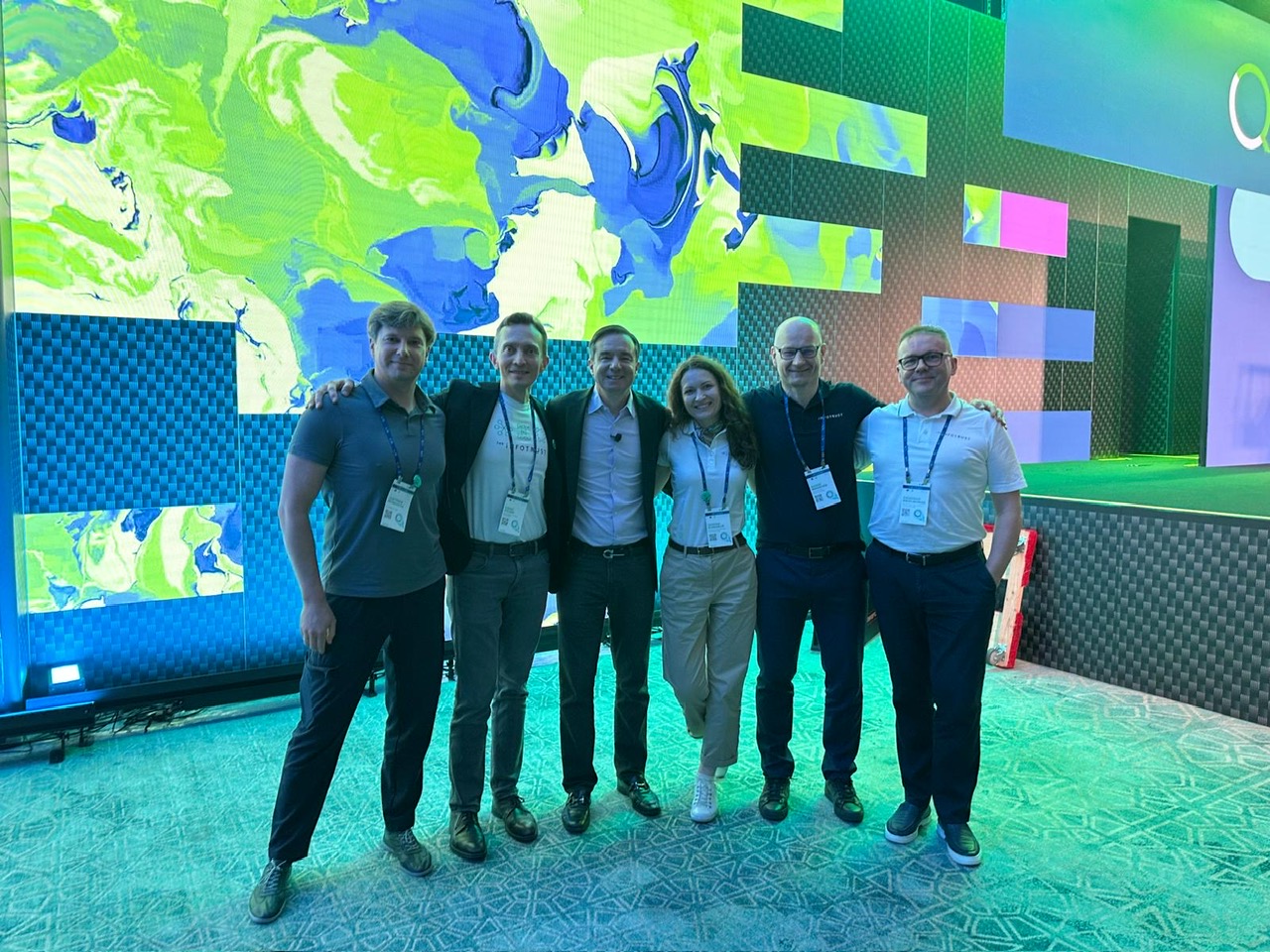
On April 13th, the annual Qlik Connect conference brought together customers, partners, and industry leaders to discuss where data and analytics are heading.
I came back from Qlik Connect 2026 with a very simple feeling:
AI is no longer something companies are experimenting with — it is already changing how business is run. For the last two years, AI has been everywhere – presentations, roadmaps, hype.
This year was different.
Less theory. Less “future talk.” More real use cases, real numbers, real outcomes.
Companies are already using AI to drive measurable business results.
And honestly, that changes the conversation completely.
Qlik used to be an analytics company.
Today, it is clearly moving into something else – an AI orchestration layer.
Not just helping you understand data but helping you act on it.
The shift is simple:
From “what happened?” to “what should we do, and just do it.”
If you are still thinking about dashboards as the end goal, you are already behind.

A few numbers that stuck with me (according to data presented at Qlik Connect 2026):
So, what does this mean in practice?
Nobody has fully figured it out yet. But everyone is moving.
And in this kind of environment, if you don’t evolve, you don’t stay where you are.
You get replaced!

There is still a misconception that AI is about some “next-level intelligence.”
In reality most value today is very simple:
So, the biggest impact is not innovation.
It’s:
Doing the same things faster, cheaper, and with fewer mistakes.
And I can confirm we already see this in our own projects as well.
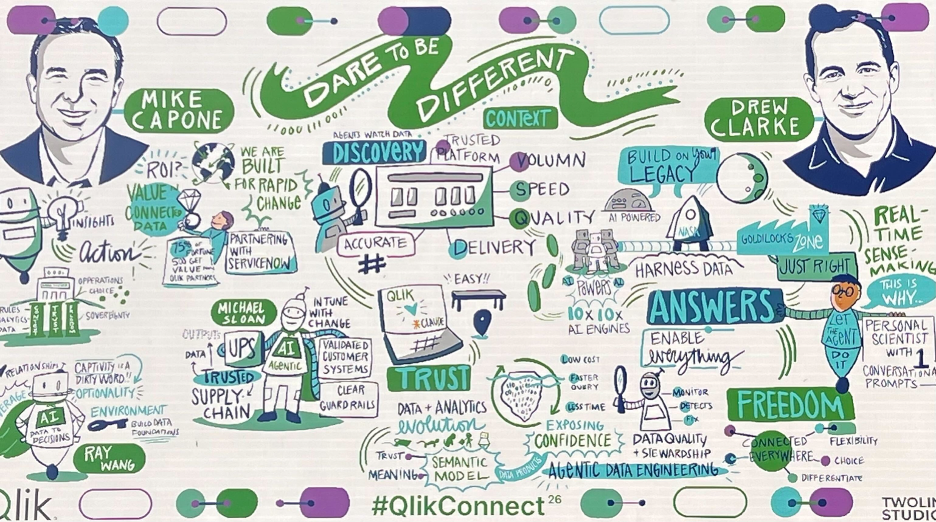
One statement from Mike Capone (Qlik CEO) stuck with me:
We are closer to Agentic AI than we think.
And after the conference, I agree.
Agentic AI is not just answering questions.
It makes decisions, takes actions, follows goals over time.
In Qlik’s case, you already see this direction clearly:
The difference is important:
It’s not about where AI lives.
It’s about AI being able to act across systems.
That’s a big step forward from Qlik, and I love it.
There is no “maybe” here.
If your data is not in the cloud, your AI ambitions are limited.
You can experiment locally.
You cannot scale there.
That’s why Qlik is pushing hard into cloud, automation, integrations (like ServiceNow).
And this is where things get interesting.
Because now we are not talking about analytics anymore.
We are talking about workflows, operations, and decision execution.
Not dashboards.
Not reports.
It’s a system that connects data, AI, and actions.
That’s it.
And that’s also why many companies struggle with it, because this is no longer just a BI topic. This is where real business value is created.
Every company wants AI.
Very few are actually ready for it.
Because AI depends on data that is:
One analogy from the conference was perfect:
AI is like a very fast and energetic intern.
If your data is wrong, it will confidently make wrong decisions.
And with Agentic AI, those decisions turn into actions.
That’s where the real risk starts.
Qlik is pushing the Open Lakehouse approach.
In simple terms:
Why does this matter?
Because companies are tired of:
And the numbers are not small:
This is not theoretical; this is where budgets are going.
One of the most valuable insights from the conference for me was this:
AI initiatives should not start with technology; they should start with business value.
A practical approach looks like this (cheat sheet process from one of the conference slides):
The logic should be simple:
Most companies fail because they skip directly to building solutions without clearly defining the problem.
This approach is not new; it reflects a combination of outcome-driven thinking, lean execution, and modern data practices. The key idea is simple: start with business value, prove it quickly, and scale what works.
When this approach is followed, companies start building data products.
These are structured, reusable datasets designed for specific use cases, such as:
Once these data products are in place, they can be combined with AI to create:
automated, decision-making systems.
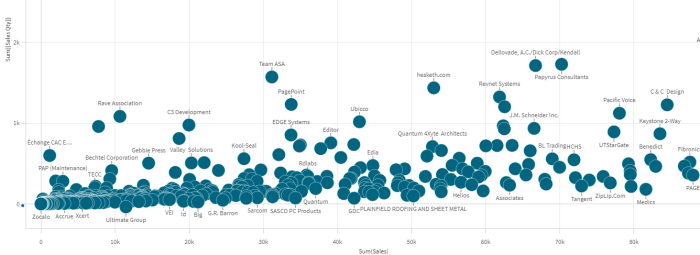
One good example presented at the conference showed how an RFM (recency, frequency, monetary value) segmentation model was built using Qlik Predict to support sales and marketing. The model is now used on a daily basis in sales operations, demonstrating how quickly practical, data-driven use cases can be implemented and adopted.
We are moving beyond dashboards.
Companies are already:
In the near future AI will not just support decisions, it will execute them.
Another strong takeaway from the conference was that AI-native businesses are already emerging. In one example, a company has built a fully automated bad debt collection process using agentic AI and LLMs. The system handles the entire communication with debtors — with no human involvement — and is already operating successfully while generating significant margins.
The biggest impact does not come from tools.
It comes from focus.
Because the shift is already happening.
Companies that act now will become faster and more efficient.
Those who wait risk falling behind, not gradually, but exponentially.
P.S. The visit to Qlik Connect made a real difference in how I see where the market is going. It was also a proud moment for our team — we received the Qlik EMEA Master Reseller of the Year 2025 Award. It’s a strong signal that what we are building is on the right path, and now the responsibility is to keep raising the bar.